Profile
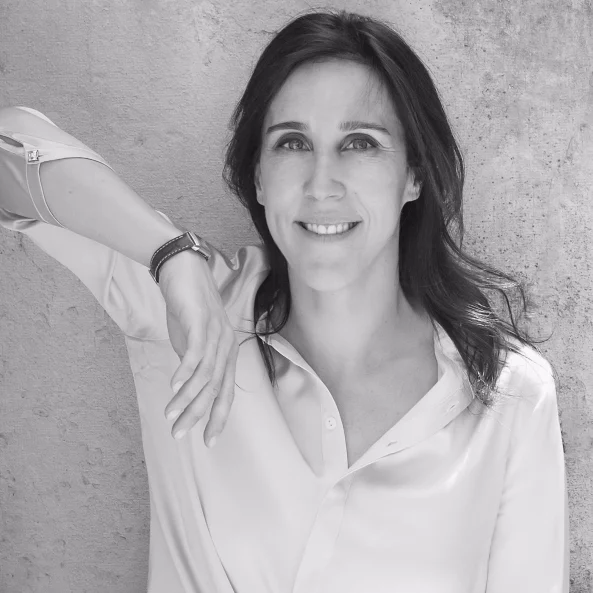
Mobilizing her network: being an ambassador according to Alexandra Curiel-Joffo
Having lost her husband to glioblastoma, Alexandra has been mobilizing her network for several months to support Paris Brain Institute. Through her commitment, she has already raised more than €150,000 in Europe and close to $350,000 in the US to fund an international research project led jointly by Dr Mehdi Touat, a neuro-oncologist at Pitié-Salpêtrière Hospital and co-team leader at Paris Brain Institute, and Dr Keith Ligon of Harvard Medical School. A truly exemplary display of dynamism.
You wanted to help by raising funds for glioblastoma research. What are the reasons behind this commitment?
My husband, Franck, died at the age of 51 from this form of incurable brain cancer. Patients affected have a life expectancy of 12 to 14 months, and there has been no change in this outcome for decades. Despite high-quality medical care and several trial protocols, Franck passed away within a year. His doctor, Dr. Touat, told me about his fundamental research project on glioblastomas. I immediately wanted to get involved to speed up the launch.
As an ambassador, you have forged a special bond with the Institute. What was it that made an impression on you?
I was impressed by the professionalism, dedication, and efficiency of the Institute’s teams, including the researchers, the philanthropy team, and the President, Professor Gérard Saillant. The entire organization is focused on cutting-edge research for the benefit of patients, with a unique international outreach and collaborative spirit. Research on glioblastoma is a perfect example of this: it brings together multidisciplinary teams from the Institute and Harvard Medical School to develop new therapeutic approaches. On a personal level, I was also touched by the openness and kindness of the teams after my husband’s death. They enthusiastically welcomed my initiatives, devoting time to what I was doing without any guarantee of funds being raised.
What actions have you implemented with the Institute to engage your network?
I started with an online donation page that I shared extensively with my family, friends, and professional contacts. With close friends, I organized a fundraising cocktail party in New York. Hearing about the Institute and ongoing research directly from doctors and researchers had a powerful impact on participants. The Institute’s teams helped me enormously with the organization, taking care of donor follow-up, invitations, mailouts, thank-you notes, and reporting. That’s why I plan to organize more cocktail parties in Paris, London, and New York in 2025 and a charity gala in 2026, and I already have other ideas for 2027.
Thanks to you, this international project has received donations from France, Europe, and the United States. Why was it important for you to take action across borders?
This disease affects people all over the world, with the same dramatic consequences and the same feeling of helplessness due to the lack of treatment. In addition, I have family and friends abroad, and many contributed financially and agreed to help me go further. In Anglo-Saxon countries, the culture of giving is quite widespread. The Institute has facilitated my work through its US-based foundation and its partnerships abroad, which allow donations to be tax-deductible in several countries (Europe, United Kingdom, Switzerland, Hong Kong, etc.).