Profile
A family affair: philanthropy according to Caroline Dumas
How did you hear about the Institute?
As a physician who had worked for several years with neurologists at Pitié-Salpêtrière Hospital, I heard about the plan to create Paris Brain Institute relatively early on. Our family’s interest in the Institute has grown over the years, following various encounters that have all demonstrated the scope and variety of the projects being carried out to improve our understanding of the workings of the brain and, more broadly, the nervous system.
What do you think characterizes the research performed at the Institute?
Having multidisciplinary teams with an international reputation working closely together on joint projects in one place, with the ultimate goal of providing the best possible relief for patients, is very rewarding and reassuring.
Why did you decide to support the Institute?
Our family’s decision to support the Institute was almost obvious, after having to cope, like many families, with loved ones who had suffered from brain-related diseases.
Your family has been involved in philanthropy for several generations, and you have involved your children in your philanthropic endeavors. Why is this important to you?
We are aware that researchers work over the long term and that our philanthropic approach is focused on the future, to relieve the suffering of current patients, but also future generations. With this in mind, our children voluntarily agreed to join us in supporting this project.
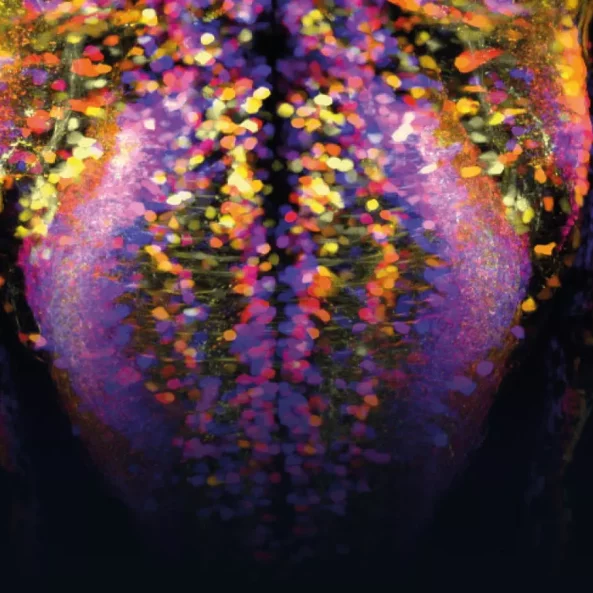
This year, you decided to make a designated donation for the purchase of an Apotome 3 microscope for the Institute’s ICM.Quant facility, in the name of your deceased parents. Could you tell us more about this choice and the significance of this donation in memoriam?
I was only able to discuss this specific project with my mother to a limited extent during her final weeks, because of her impaired cognitive functions. However, any mention of support for the Institute, whatever form it might take, always brought a smile to her face and a little sparkle to her eyes, which reassured me in my approach. My parents would most likely have agreed to the presence, within the Institute, of long-lasting equipment that could assist the work of a number of teams. Our hope is that this unit will facilitate the day-to-day work of researchers and exchanges between teams.
What do you gain from supporting the Institute and sharing this philanthropic approach with your loved ones?
This support is an opportunity for all of us, both healthy individuals and patients, to remember how essential research is to advance knowledge about the brain and help to manage diseases of the nervous system.
To what degree are generosity and philanthropy values that are passed down through families?
Passing on these essential values from one generation to the next is something we hold very dear and demonstrates our family approach. We hope that this will be an inspiration for other donors!