Profile
Béatrice Philippe: a dedicated life in the service of research
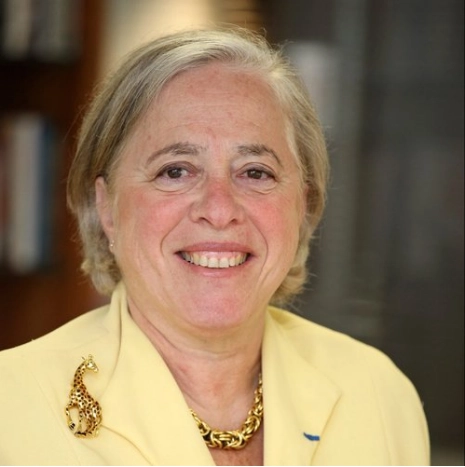
The Philippe Foundation’s commitment to Paris the Brain Institute is rooted in a deeply personal and family history. Established in 1953 by her parents, the foundation was initially dedicated to cancer research, before gradually broadening its scope to include neurodegenerative diseases, which have become increasingly significant. Marked by several personal experiences – a family friend with Parkinson’s disease, a cousin who recently passed away, and relatives receiving care at the Institute – she has developed a particular sensitivity to the challenges associated with brain diseases.
Béatrice Philippe’s encounter with the Paris Brain Institute was the turning point. She describes her initial exchanges with Professors Alexis Brice and Gérard Saillant as “two wonderful encounters”. But beyond the individuals themselves, it was the entire ecosystem that impressed her: “When you arrive at the Paris Brain Institute, you discover a modern and vibrant place where fundamental research, innovation and start-ups coexist. It’s fascinating. ” During her visits, she met numerous researchers and scholarship holders, some of whom have since gone on to have remarkable careers.
Over the years, her foundation has supported research by awarding around a hundred grants each year, with a particular focus on fostering exchanges between France and the United States, in a philanthropic tradition inspired by the American model. “Supporting young researchers, often at the start of their careers and inadequately paid, has always been at the heart of what we do,” she emphasises.
“When you arrive at the Paris Brain Institute, you discover a modern and vibrant place where fundamental research, innovation and start-ups coexist. It’s fascinating.”
Béatrice Philippe
Today, after more than seventy years in existence, the foundation has been dissolved following a collective family decision. In total, some $10–12 million has been committed over the years to encourage scientific collaboration between France and the United States. “We are turning a page, but the journey continues through these institutions,” she says.
Despite this transition, her conviction remains unchanged: progress in research, particularly into neurodegenerative diseases such as Alzheimer’s, Parkinson’s or ALS, is essential and a source of hope, especially with the acceleration made possible by artificial intelligence.
If she had to name one reason to be proud, she would say her contribution to nurturing talent: “Receiving letters from researchers telling us that it has made a real difference is undoubtedly the greatest reward.” A quiet but profoundly valuable commitment, focused on the future.